I remember the celebrations most as a youngster (c.1959 – 1970) when it was a much different event than it is now. The route from Birthplace to Church via the ‘historic spine’ is about the only thing unchanged.
Firstly, it was very much a Stratford affair, there were far fewer international tourists then and as the procession was held on 23 April (excepting Sundays, as I recall, not the nearest weekend to it), then even British tourists were few. From April to October there were overseas tourists but these were mainly Americans and some Europeans. Now, of course, we see people from all over the globe; I have even had a conversation with Australian aborigines. Stratford ‘closed’ for the day and best of all, the schools closed for the day too, to allow the children a chance to attend (or not!).
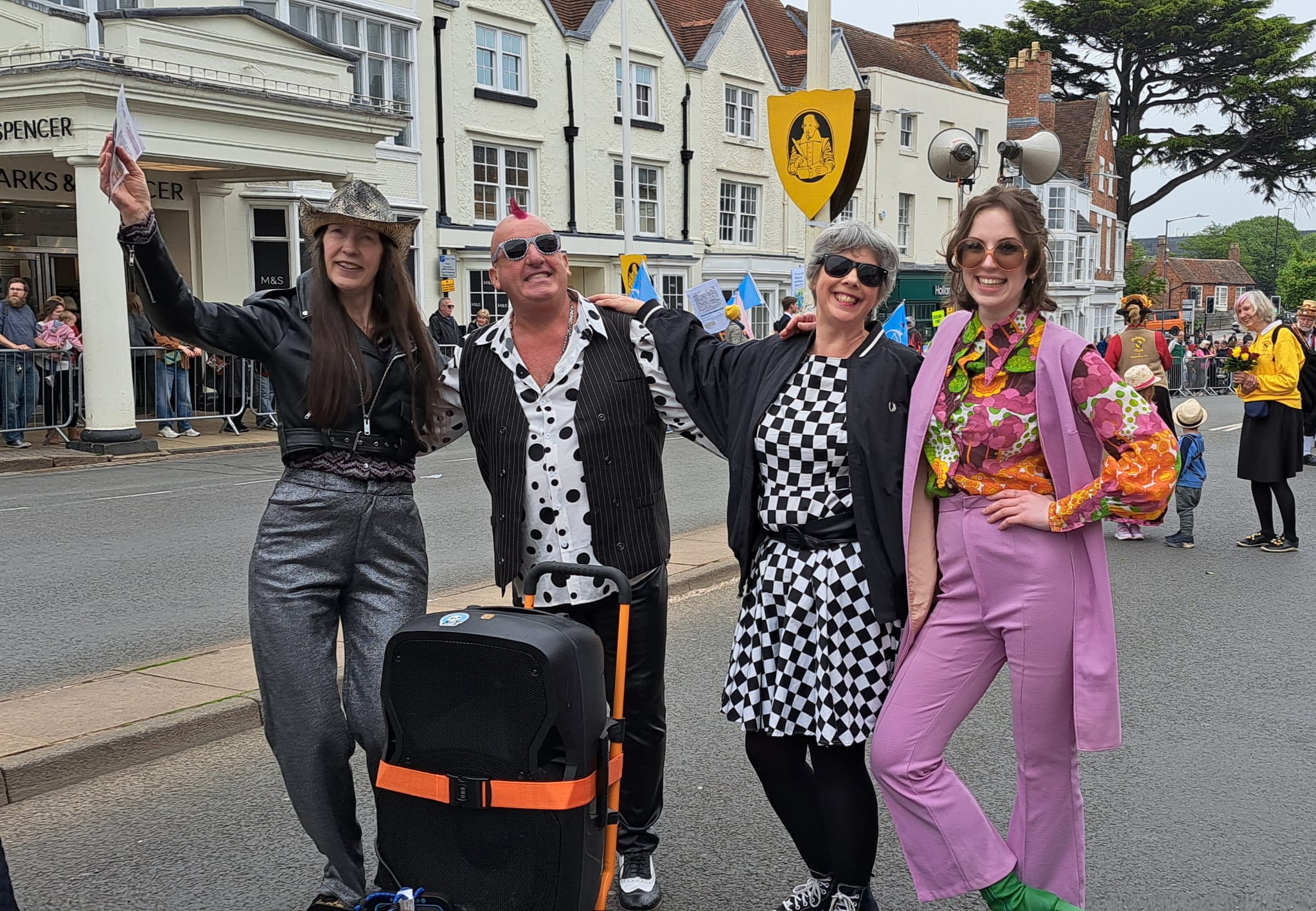
For me the flags were the most interesting. All of the town centre’s streets were lined with white flag poles a few days before the celebrations, scores of them; attached to the poles were wooden shields each carrying a finely painted image of the country’s flag to be flown from the pole and the country’s name. Early in the morning of ‘the day’ the rolled flags were raised to the flag tops by Corporation workers. And at 11 a.m. the representatives of each country tugged the rope and unfurled their flags. It was a splendid sight to see all the colours break open through the town; all different colours, shapes and sizes flapping in the wind. I can safely say that by the age of ten I and most of my schoolmates knew every national flag in the world. (Even if we didn’t fully understand where these countries were or what the people looked like.)
And then the procession assembled; ambassadors or their embassy representatives carrying floral tributes (wreathes mainly) which bore their country’s name, to be laid near Shakespeare’s grave. Once all were ready the procession began, led by the band of the Corps of Royal Engineers and a Troop of soldiers, rifles shouldered. Then followed the civic party led by the Beadle. The Beadle (since 1941) was Fred Baker; he stood about 4’9” and was a rotund fellow (a living toby jug); his staff of office towered above him as he strode along. Then came the Mayor with the mace bearers followed by the Town Councillors, all in their hats and gowns. They were followed by the dignitaries: our MP (until 1963 John Profumo) and academics, theatre people and actors (none of whom we recognised) and then a small delegation of boys from KES. After this came those who we, as curious youngsters, had been waiting for: the ambassadors and their wives from London, most were dressed in morning suits and fine dresses, but a good many were dressed in their national costumes: the Japanese ambassador in a morning suit and top hat beside his wife in a kimono; African ladies and gentlemen in very colourful flowing robes; Indian ladies in glowing saris. We had seen pictures of these very foreign people in geography lessons, but to see them in the flesh was a revelation to us youngsters. Although it was a formal occasion, the visitors acknowledged the crowds that lined the streets with waves and smiles.
The public were allowed into the Holy Trinity Church to see the floral tributes when the guests had dispersed. It was a sight: the sanctuary and a good part of the chancel was bedecked with flowers; the colours and scents were astonishing.
The next day we went back to school.
Licence & Credits

Licence
CC BY 4.0Submitted / shared by
Shared by Phil Spinks